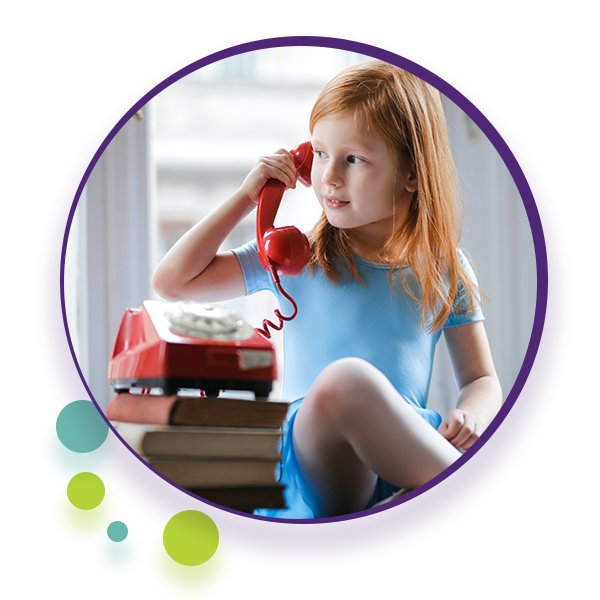
Every child has thoughts, feelings, wants, and stories worth sharing. Expressive language is how they bring those things into the world, whether that’s through words and sentences or nonverbal communication like pointing, gestures, and facial expressions.
Some children need support finding the right words, building sentences, or organizing their thoughts, and expressive language therapy from a speech-language pathologist can help strengthen these skills. At The Clubhouse, this is one of several language areas addressed as part of our speech therapy services.
What is Expressive Language?
Expressive language is the ability to communicate messages to other people. That communication can include saying a word to ask for a snack, putting words together to tell you what happened at school, signing “more,” pointing toward something they want, or using other gestures and communication methods to make an idea known.
Speech therapy for expressive language builds on the communication a child already uses while helping them develop additional skills for getting their message across.
Strong expressive language skills help a child:
- Find and use the right words for what they mean
- Put words together into phrases and sentences that make sense
- Use grammar naturally, like the right verb tense or word order
- Ask questions and answer the ones that come their way
- Describe a person, object, or moment with enough detail that someone can picture it
- Gather their thoughts before (or while) they’re talking
- Tell a story or share what happened in a way that follows along
Expressive Language vs. Receptive Language
Language involves both understanding what other people communicate and being able to communicate something back. That’s the basic difference when talking about receptive vs. expressive language, although the two work closely together throughout everyday communication.
Receptive Language
Understanding words, questions, instructions, concepts, and sentences. For example, your child understands when you say, “Get your shoes and bring them to me.”
Expressive Language
Communicating thoughts, ideas, wants, needs, and information. For example, your child tells you they want their shoes because they’re ready to go outside.
A child may have stronger skills in one area than the other, while some children experience challenges with both receptive and expressive language. Because understanding language and expressing it happen together so often, it can be difficult to tell which area is causing your child to struggle. A speech-language pathologist can help separate the two and identify the specific skills that may need support.
Signs a Child May Benefit From Expressive Language Support
Expressive language difficulties can look different depending on a child’s age, development, and current ways of communicating. Possible signs of an expressive language delay may include:
- Using fewer words or a more limited vocabulary than expected
- Having difficulty learning or recalling words
- Using general words like “thing” instead of specific words
- Relying mostly on short or incomplete sentences
- Having trouble combining words into longer sentences
- Leaving important words out of sentences
- Having difficulty with grammar, verb forms, pronouns, plurals, or word order
- Struggling to answer questions or explain an answer
- Having difficulty describing an event or explaining what happened
- Struggling to put ideas in order when telling a story
- Knowing what they want to communicate but struggling to find the words
- Becoming frustrated when others don’t understand their message
Children develop at different rates, and any one of these signs does not mean a child has an expressive language disorder. A speech-language evaluation can look more closely at your child’s skills and determine whether support may be appropriate. If it is, expressive language speech therapy can focus on the areas where your child needs help.
How Expressive Language Is Evaluated
An expressive language evaluation looks at more than how many words your child says. A speech-language pathologist considers how your child communicates, understands language, puts ideas together, and uses those skills in different situations.
Talking About Your Child’s Communication
The evaluation often begins with you. Your speech-language pathologist will ask about your concerns, your child’s developmental history, the ways they communicate now, and situations where communication seems easier or more difficult.
Observing and Evaluating Language Skills
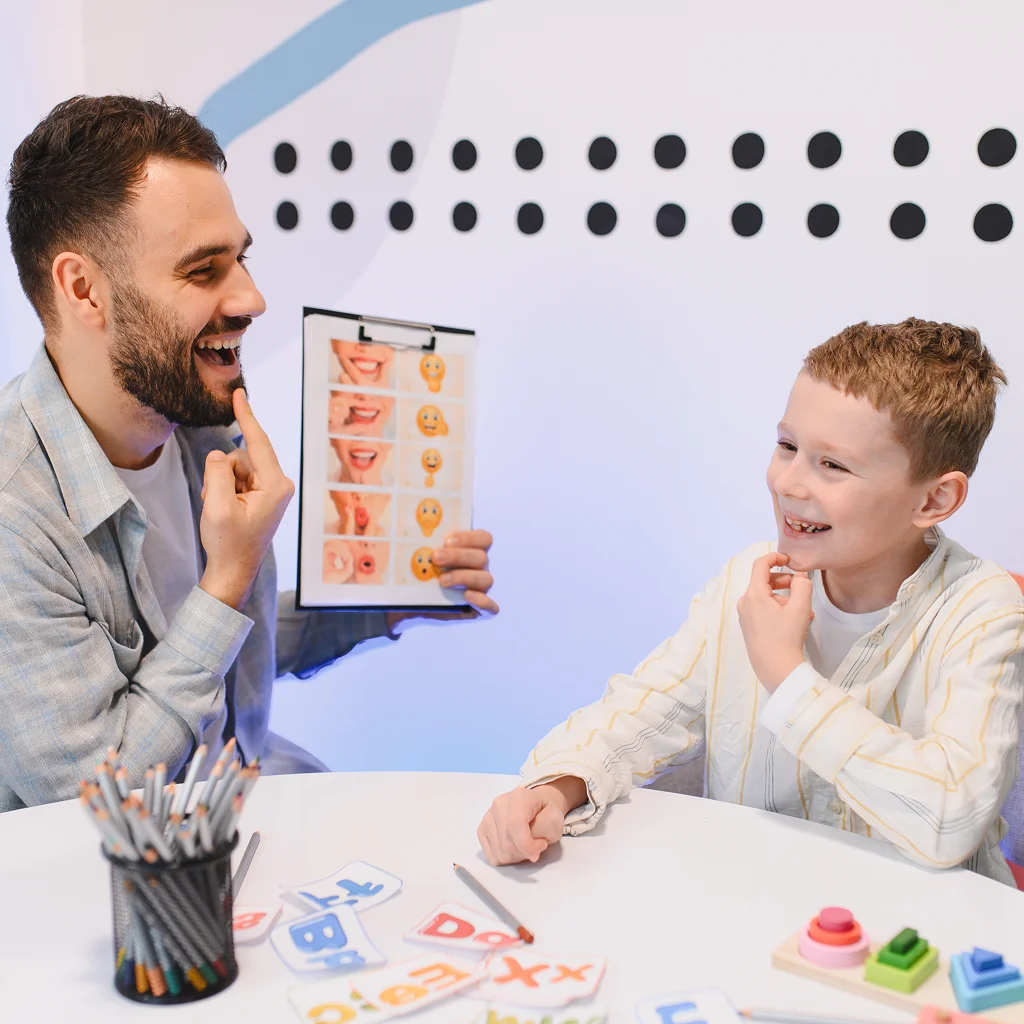
Depending on your child’s age and needs, the evaluation may include play, conversation, language samples, and formal or informal measures. These help us look at vocabulary and word use, sentence structure, grammar, answering questions, and other expressive language skills.
Looking at Stories and Functional Communication
Your child may also be asked to describe something, retell an experience, or put events in order to see how they organize and communicate ideas. We also consider how they communicate their wants, needs, thoughts, and information in different situations, along with receptive language and other communication skills.
A hearing screening or referral may be recommended because hearing can affect language development. We also consider the languages and dialects your child uses so differences aren’t mistaken for a language disorder. Together, the results help determine
whether speech therapy for language development may be helpful.
How Speech Therapy Can Help With Expressive Language
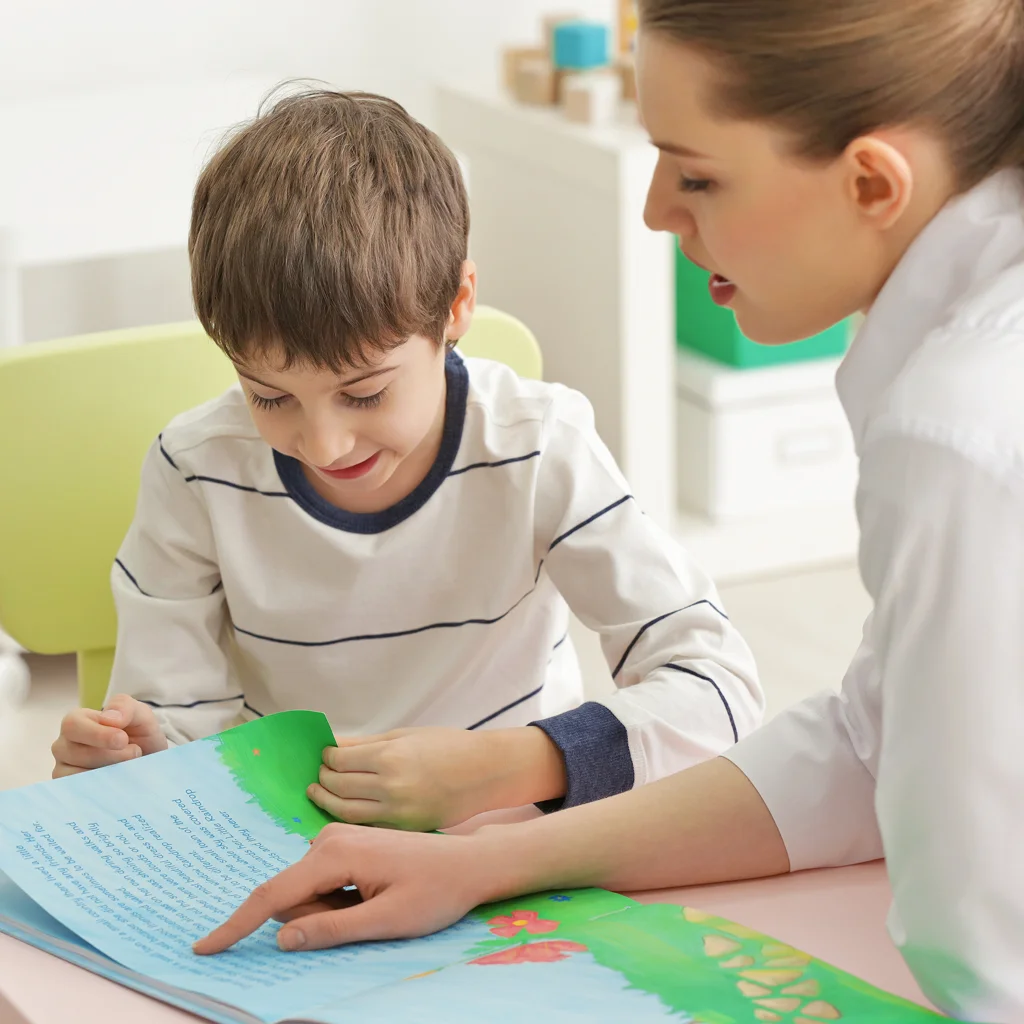
Therapy for expressive language difficulties starts with what your child can already communicate and where they need support. Sessions may use play, books, pictures, conversation, modeling, repetition, or structured activities to build expressive communication skills.
Sessions focus on the expressive communication skills that can make a meaningful difference in your child’s life. The goal isn’t simply longer sentences; it’s to make communication clearer and more effective at home, at school, during play, and in social situations. Parents and caregivers are also shown ways to support these skills outside of therapy.
Expressive Language Skills We May Work On
The skills we focus on depend on what will be most useful for your child. Language therapy for children may address areas such as:
Vocabulary and Word Finding
Expanding vocabulary and helping children find and recall the words they want to use.
Phrases, Sentences, and Grammar
Combining words, building longer or more complex sentences, and working with verbs, pronouns, plurals, prepositions, and more.
Questions and Descriptions
Asking and answering questions and describing people, objects, actions, and events.
Organizing and Sharing Ideas
Sequencing thoughts, explaining ideas clearly, retelling personal experiences, and developing storytelling skills.
Communicating What Matters
Expressing wants, needs, feelings, and opinions in ways other people can understand.
Using Skills Beyond Therapy
Practicing new language skills so they can be better understood at home, school, during play, and in social situations.
These are examples of skills we may address, not a set of goals every child is expected to work through. Therapy is individualized around your child’s current communication abilities and needs.
Who May Benefit From Expressive Language Therapy?
There isn’t one type of child who benefits from expressive language therapy. We work with children, teens, and young adults whose communication abilities, challenges, and goals can look very different from one another.
Some need support mainly with expressive language, while others have needs involving receptive language, speech sounds, social communication, or several areas at once. These differences may or may not be connected to a developmental or communication diagnosis. The important question is whether stronger expressive language skills could help them communicate more effectively with the people in their lives.


Why Expressive Language Skills Matter in Everyday Life
Expressive language gives children more ways to take part in what’s happening around them and make sure other people know what they need, think, feel, and know. As children get older, these skills also grow more complex, especially as school brings new vocabulary, longer conversations, storytelling, and more opportunities to explain their thinking.
- Tell others what they want or need and ask for help when they need it
- Share ideas, experiences, feelings, and opinions with the people around them
- Participate in classroom discussions, answer questions, and demonstrate knowledge
- Tell and retell stories in a way that helps someone else follow along
- Take part in play, conversations, and interactions with family, classmates, and friends
- Communicate more independently as they make choices and solve problems
Strengthening expressive language can give a child more ways to participate, connect, learn, and speak—or otherwise communicate—for themselves.
What to Expect From Expressive Language Therapy
Following the initial evaluation, we’ll talk with you about what we learned and what those findings mean for your child’s communication. If expressive language therapy is recommended, we’ll outline the skills we want to work on and why they’re important for your child. When therapy begins, sessions are designed to practice those skills in ways that are engaging, functional, and appropriate for their age.
There’s no standard timeline for expressive language therapy; the frequency, duration, and goals of treatment are individualized based on your child’s communication profile, needs, and progress.
Supporting Expressive Language Outside of Therapy
Some of the best opportunities to practice communication happen naturally between therapy sessions. Supporting speech therapy for language development at home doesn’t have to mean turning family time into a lesson. We suggest focusing on:
- Giving your child enough time to think about and formulate an answer
- Modeling useful words and sentences they can hear in different situations
- Expanding on what your child communicates rather than repeatedly correcting them
- Reading together and talking about the people, actions, and events in the story
- Asking meaningful questions during familiar routines and activities
- Encouraging your child to describe experiences or tell you about something that happened
- Practicing strategies recommended by your child’s speech-language pathologist
The idea is to create more opportunities to communicate, not more pressure to get every word or sentence right.
Expressive Language Therapy at Our Locations
Your child deserves more ways to share what they need, think, feel, and want others to know. At The Clubhouse, we provide individualized expressive language therapy for children, teens, and young adults throughout Chicago and the western suburbs at our Downers Grove and North Mayfair locations. Our speech-language pathologists meet each child where they are and build therapy around the communication skills that can make a meaningful difference in their lives.
Frequently Asked Questions
Expressive language therapy helps children, teens, and young adults strengthen their ability to communicate wants, needs, thoughts, feelings, ideas, and experiences. Therapy may work on vocabulary, word finding, sentence formation, grammar, storytelling, or other areas depending on the individual.
Expressive language skills include using words and sentences, asking questions, describing events, and telling stories. They also help a person express wants, needs, feelings, and opinions. Communication may be verbal or use signs, gestures, and other methods.
Receptive language involves understanding what other people communicate. Expressive language involves communicating your own thoughts, needs, ideas, and information. A child can have different strengths and needs in each area.
A child may have trouble finding words, forming sentences, answering questions, or explaining what happened. Others may struggle with grammar, descriptions, or putting ideas in order. An evaluation can help determine whether these difficulties would benefit from support.
Yes, some children understand more language than they can easily express. They may understand questions or follow directions but have difficulty finding words or explaining their thoughts. An evaluation can look at both receptive and expressive abilities.
Speech therapy for language development targets the communication skills an individual needs most. Sessions may use play, conversation, books, pictures, modeling, or structured activities. The goal is to build useful communication skills that can carry into other settings.
There is no single age for beginning language therapy for children. Speech-language pathologists can evaluate and support communication during the toddler years and throughout childhood. If you have concerns, an evaluation can help determine whether support is appropriate now.
An evaluation looks at your child’s current communication strengths and areas of difficulty. It may include caregiver input, observation, language samples, play, conversation, and assessment measures. The results help the SLP determine whether therapy may be appropriate.
There is no set timeline because communication needs differ from person to person. Therapy frequency, goals, progress, and the type of services provided all affect how long therapy may continue. Your child’s SLP will monitor progress and adjust recommendations as needed.
Explore Expressive Language Therapy at The Clubhouse
Parents and other caregivers know a child’s communication better than anyone, so if something has you concerned, it’s worth a conversation. The Clubhouse can help you understand what you’re seeing and whether expressive language therapy may be a good next step. An evaluation gives us a closer look at how your child communicates and where support could be useful. Reach out to our Downers Grove or North Mayfair team to get started.