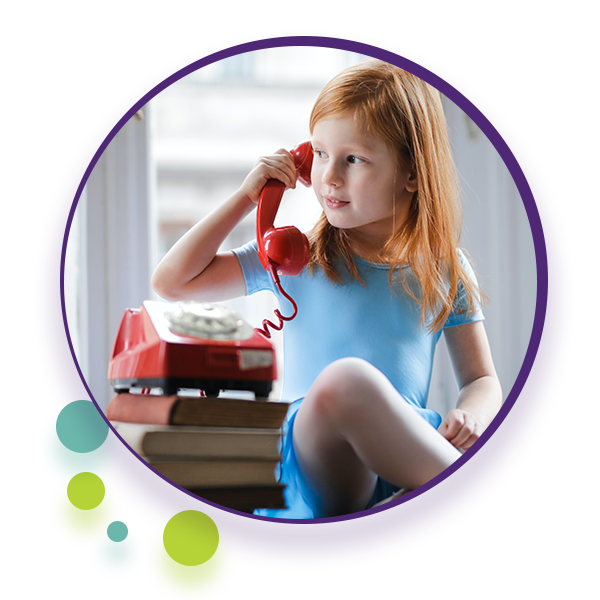
Receptive language is the ability to understand and make sense of the words, gestures, and ideas we hear and see. It’s what allows a toddler to point to the dog when you ask, Where’s the puppy? Or what enables a 5th grader to follow a friend’s story. Without solid receptive language, expressive language, reading, and social connection all become harder to build.
At The Clubhouse, our speech-language pathologists help children strengthen their understanding of language so they can learn, follow directions, build relationships, and participate fully at home, at school, and in the community. Read on to learn how receptive language develops, what a delay can look like, and how our team can help.
What Is Receptive Language?
Receptive language is sometimes called “language comprehension.” It’s the input side of communication, the part that happens before a child ever says a word back.
Receptive language works hand-in-hand with expressive language (the ability to use words, sentences, and gestures to communicate), but the two don’t always develop at the same pace. Many children we see are able to say more than they seem to understand, or vice versa, which is why a full speech therapy evaluation looks at both.
Strong receptive language allows a child to:
How Receptive Language Develops
Language comprehension builds in a fairly predictable order, though every child’s timeline looks a little different.
- Infants (0–12 months): Begin recognizing familiar voices, turning toward sound, and responding to their name.
- Toddlers (1–3 years): Start following simple one-step directions, pointing to familiar objects and family members when named, and understanding simple questions.
- Preschoolers (3–5 years): Understand multi-step directions, basic concepts (big/little, in/out), and simple stories.
- School-age children and teens (5+ years) understand more complex sentence structures, classroom instructions, figurative language, humor, and longer narratives.
Because so much of learning depends on understanding language first, a receptive language delay at any age can have a ripple effect that extends well beyond the classroom, making it harder to keep up with peers or feel confident in everyday interactions.
Common Signs of a Receptive Language Challenge
Every child develops differently. But if you notice these patterns in your child, it’s worth having a conversation with a speech-language pathologist:
- Not responding consistently to their name or simple requests
- Difficulty following one or two-step directions
- Frequently answering questions with unrelated or off-topic responses
- Relying heavily on routine or visual cues to “get by” without truly understanding what’s said
- Trouble understanding age-appropriate vocabulary or concepts (colors, sizes, categories, etc.)
- Difficulty following along with stories, conversations, or classroom lessons
- Appearing to ignore instructions
- Struggling to answer “wh-” questions (who, what, where, when, why)
A receptive language delay can sometimes look like a behavior issue or an attention issue, since a child who doesn’t understand a direction may not respond to it, wander off, or get frustrated. A comprehensive evaluation helps sort out what’s really going on.


Who Benefits from Receptive Language Support?
Receptive language support from a speech therapist can help children of many different ages in a variety of situations, including:
- Toddlers and preschoolers with early language delays
- Children who have difficulty following directions at home or in school
- Children with an autism diagnosis or social communication differences
- Kids who are deaf or hard of hearing
- Children with reading or learning disorders connected to language comprehension
- Older children and teens who need support with complex language, inference, or abstract concepts
Not sure if your child needs support with receptive language? Ask their pediatrician, or schedule a consultation with The Clubhouse.
How We Assess Receptive Language at The Clubhouse
Understanding why a child is struggling to comprehend language is the foundation of an effective treatment plan. Our speech-language pathologists use a combination of:
Standardized, norm-referenced testing
Standardized, norm-referenced testing to compare a child’s comprehension skills to same-age peers across vocabulary, following directions, and sentence-level understanding.
Language sampling and informal observation
Language sampling and informal observation, watching how a child understands and responds to language during natural play and conversation.
Parent and caregiver interviews
Parent and caregiver interviews, since you know your child’s day-to-day communication better than a single testing session ever could.
Collaboration with teachers, pediatricians, and other providers
Collaboration with teachers, pediatricians, and other providers when appropriate, to get a full picture of how a child understands and uses language across settings.
From there, we build an individualized therapy plan with specific, measurable goals. We also give you strategies that you can use at home to help your child practice outside of therapy sessions.
Strategies and Techniques We Use to Build Comprehension
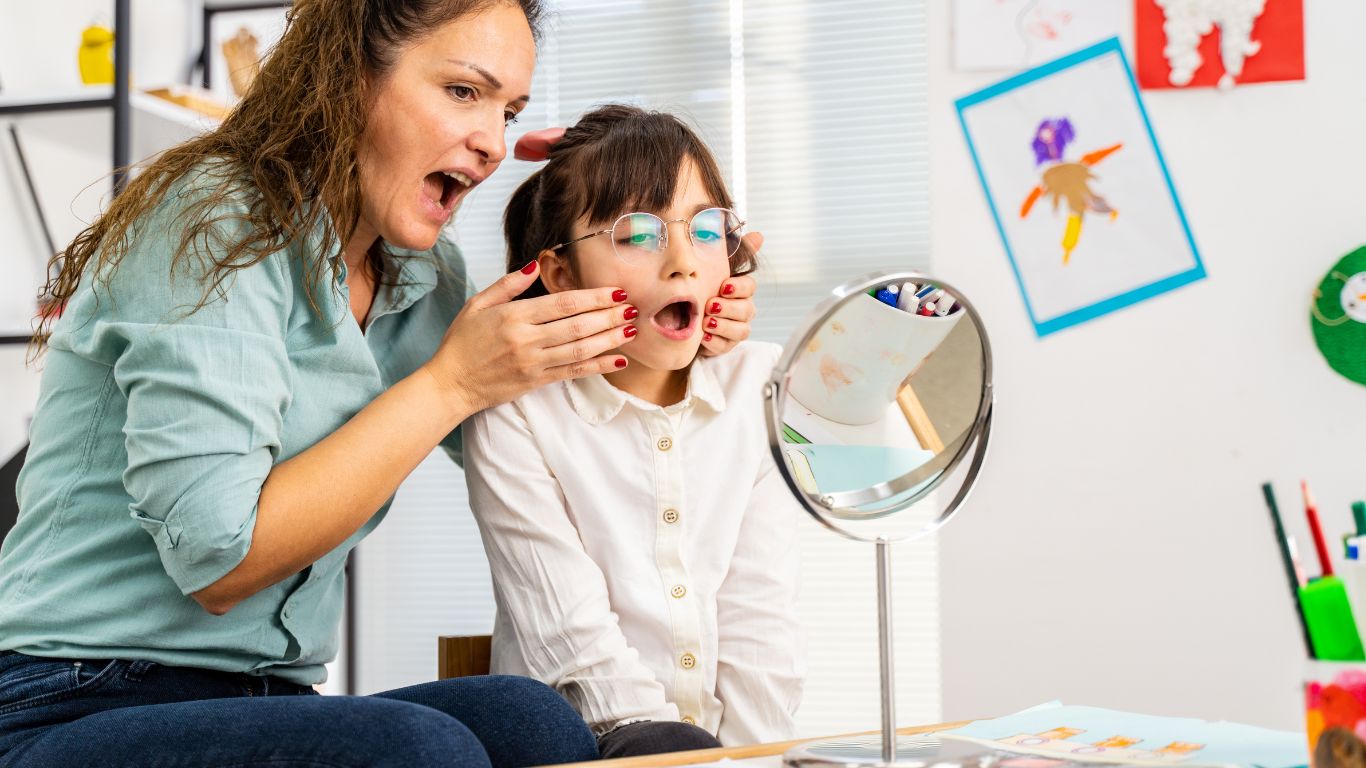
Therapy for receptive language should feel like play, not a test. Depending on a child’s age and goals, our therapists draw on techniques such as:
Modeling and Repetition
We pair spoken language with visuals, objects, and consistent repetition so new words and concepts have a chance to stick.
Practice Following Directions
We build from one-step to multi-step directions through games, obstacle courses, and everyday routines like cleaning up toys or getting ready to leave.
Visual Supports
Our therapists use picture schedules, gestures, and AAC tools to reinforce spoken language, especially for children who benefit from a visual aid alongside what they hear.
Vocabulary and Concept Building
Your child learns categories, opposites, sequencing words, and descriptive concepts through books, sorting games, and hands-on play.
Narrative and Story Comprehension
Using books and storytelling, we work with your child to build skills like sequencing, predicting, and answering questions about what was read or heard.
Naturalistic, Play-Based Teaching
Embedding comprehension goals into the toys, games, and interests your child already loves, so new skills generalize beyond the therapy room.
Family Coaching
Our therapists give parents and caregivers practical, everyday strategies to reinforce comprehension at home.

How Receptive Language Therapy Can Benefit Your Child
Comprehension is the foundation everything else is built on. When a child’s receptive language grows stronger, families often see:
- Better classroom performance, since understanding instructions and lessons is core to learning
- Smoother following of directions, at home, at school, and in the community
- Stronger vocabulary and conceptual understanding
- More confident, connected conversations with peers, siblings, and adults
- Less frustration for both children and parents, since misunderstanding often looks like misbehavior
Frequently Asked Questions About Receptive Language
Receptive language is understanding language: what a child takes in and comprehends. Expressive language, in contrast, is using language. It’s what a child says, signs, or communicates outward. Many children need support with one, the other, or both, which is why our evaluations look at each.
It’s possible, and it’s one of the first things we consider. If your child’s hearing hasn’t been recently checked, we may recommend a hearing screening alongside a speech-language evaluation to rule it out or address it alongside therapy.
Yes. Comprehension can look different across settings, especially when routines, familiar visuals, or repeated context make it easier to “get by” at home. A classroom often demands more independent, novel language comprehension, which is why school reports and teacher input are a valuable part of our evaluation process.
Every child’s timeline is different and depends on the extent of the delay, therapy frequency, and consistency of practice outside sessions. Our therapists will discuss realistic goals and expected progress after your child’s evaluation.
Explore Receptive Language Therapy at The Clubhouse
If you have concerns about how your child understands language, The Clubhouse is here to help. We offer evaluations and individualized receptive language therapy at our Downers Grove and North Mayfair locations, serving families throughout Chicago and the western suburbs.