Orofacial myofunctional disorders, often called OMDs, are patterns involving the muscles of the mouth, tongue, lips, jaw, and face that can affect how a child rests, breathes, eats, swallows, and speaks.
At The Clubhouse, our pediatric speech-language pathologists help families understand what may be contributing to these challenges and how therapy can support better oral function. Through playful, personalized, and evidence-informed treatment, we work with children to improve awareness, coordination, and speech clarity.
What Are Orofacial Myofunctional Disorders?
An orofacial myofunctional disorder occurs when the muscles of the mouth and face are not working together in a typical or efficient way. These patterns may affect a child’s oral resting posture, speech sound production, chewing, swallowing, and breathing habits.
Children with OMDs may rest their tongue low or forward in the mouth, push the tongue against or between the teeth when speaking or swallowing, keep their mouth open at rest, or rely on mouth breathing instead of nasal breathing. Over time, these patterns can impact speech development, feeding skills, dental alignment, and overall oral function.
OMDs can be related to many different factors, including:
- Prolonged thumb or finger sucking
- Extended pacifier use
- Tongue tie
- Allergies
- Enlarged tonsils or adenoids
- Airway concerns
- Dental differences
- Learned oral habits
Because every child is different, evaluation is an important first step.

Does My Child Have OMD? Look for These Signs
Your child may benefit from an orofacial myofunctional evaluation if you notice signs such as:
- Tongue thrust (pushing the tongue forward against the back of the teeth) during swallowing
- Tongue resting between or against the teeth
- Open-mouth posture when relaxed
- Drooling beyond the expected age
- Messy eating or difficulty chewing and swallowing
- Lisping or speech sound errors involving tongue placement
- Difficulty producing sounds such as /s/, /z/, /t/, /d/, /n/, or /l/
- Dental concerns such as open bite, overbite, or underbite
- Prolonged pacifier, thumb, or finger sucking
- Audible breathing, snoring, or restless sleep
Not every child with one of these signs has an OMD. Messy eating, for example, is common in young children and generally improves with age.
However, if several of these patterns are present, a speech-language evaluation can help determine whether myofunctional therapy may be appropriate. It’s also important to speak with your child’s pediatrician or dentist, as some causes of OMD can be related to underlying medical issues that may need treatment beyond speech therapy.
How OMDs Can Affect Speech, Feeding, and Daily Life
Orofacial myofunctional disorders can affect children in different ways.
Some children have difficulty producing certain speech sounds clearly because the tongue moves too far forward or rests in the wrong position. Others may struggle with chewing, swallowing, or managing saliva. Some children develop habits that affect dental development or make orthodontic treatment more challenging.
OMDs may also be connected to broader concerns, such as mouth breathing, sleep quality, airway issues, or structural differences. When needed, The Clubhouse may recommend collaboration with your child’s pediatrician, dentist, orthodontist, ENT, allergist, or other providers to make sure therapy is addressing the whole picture.

How The Clubhouse Helps Children with OMDs
At The Clubhouse, therapy starts with understanding your child’s strengths, challenges, and daily routines. We look at how your child uses their tongue, lips, jaw, and facial muscles during rest, speech, feeding, and swallowing. From there, we create an individualized plan that may target:
- Tongue resting posture
- Lip closure and oral awareness
- Nasal breathing support, when appropriate
- Speech sound placement
- Chewing and swallowing patterns
- Reduction of tongue thrust patterns
- Oral habit awareness
- Carryover into meals, conversation, school, and home routines
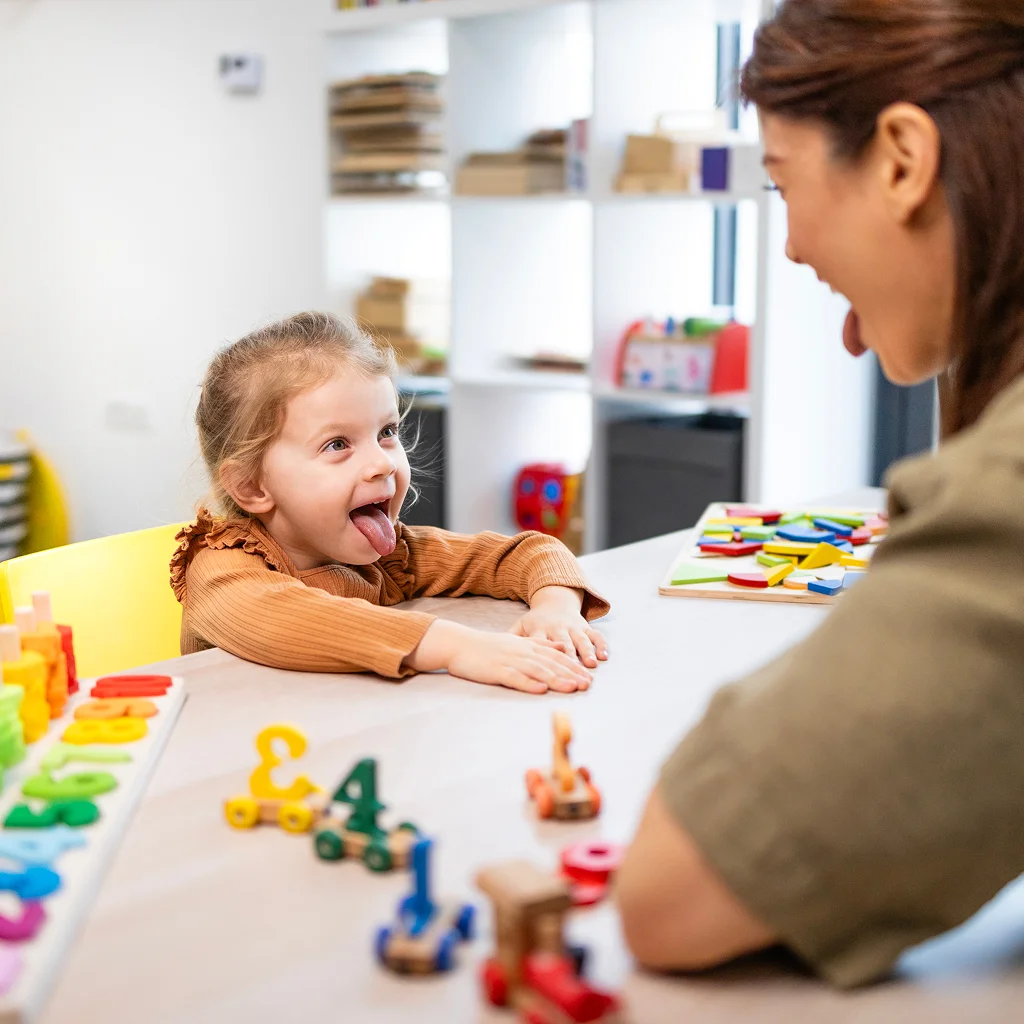
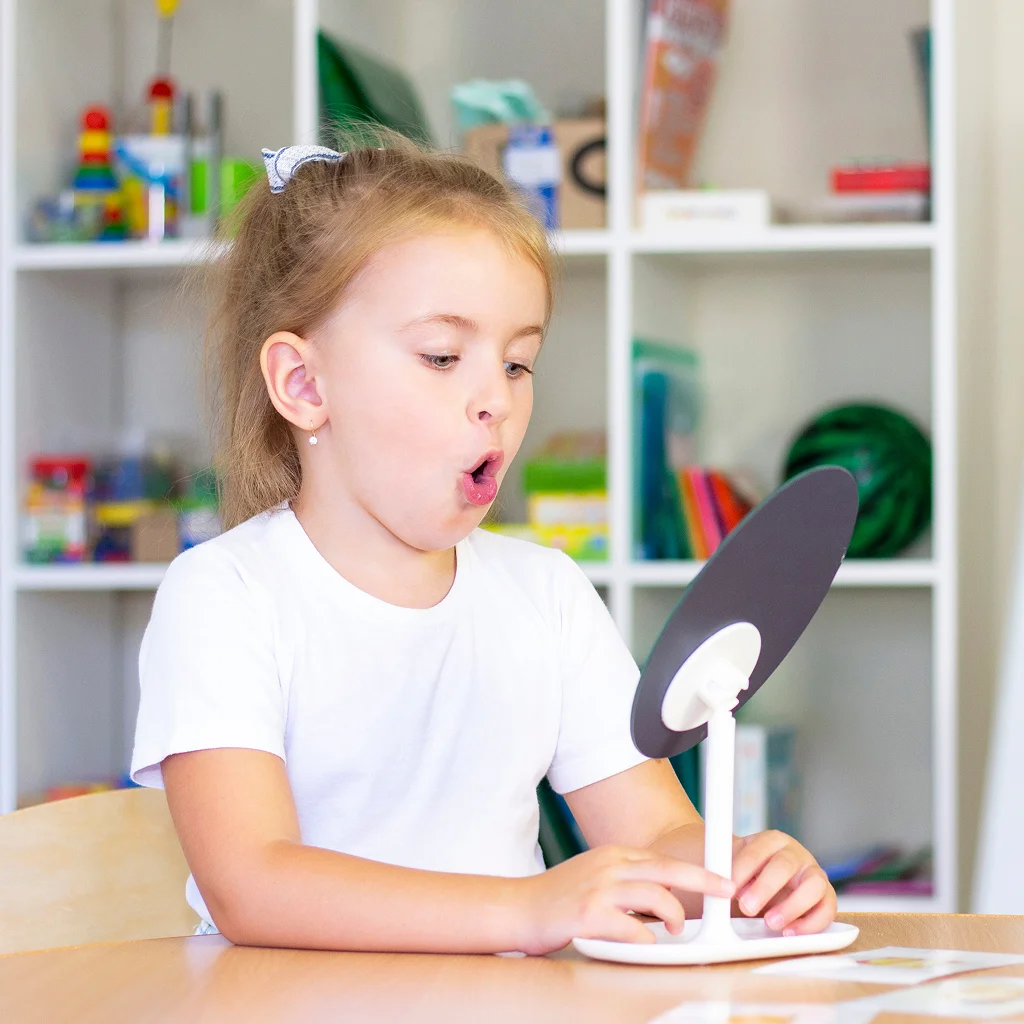
Our sessions are designed to be engaging and child-friendly. We believe kids learn best when they feel safe, encouraged, and motivated, so therapy may include games, visuals, movement, mirrors, hands-on cueing, and simple home practice activities that fit into real life.
How Orofacial Myofunctional Therapy Works at The Clubhouse
1. Comprehensive Evaluation
We begin with an evaluation to better understand your child’s oral-motor patterns, speech production, feeding or swallowing concerns, resting posture, and related developmental history. We may also ask about breathing, sleep, dental history, oral habits, and prior therapy.
2. Individualized Treatment Plan
After the evaluation, your therapist will explain findings and recommend a treatment plan based on your child’s needs. Goals may focus on tongue placement, oral awareness, speech sounds, swallowing, feeding patterns, or functional carryover.
3. Play-Based and Functional Therapy
Therapy is structured, but never one-size-fits-all. Your child may practice oral placement, speech sounds, swallowing steps, or awareness activities through age-appropriate exercises and interactive tasks.
4. Family Coaching and Home Practice
Progress with OMDs depends on consistent practice outside the clinic. Your therapist will give you realistic home strategies, such as short daily activities, mealtime reminders, or speech practice that supports your child’s goals.
5. Collaboration with Other Providers
When appropriate, we may coordinate with dentists, orthodontists, ENTs, pediatricians, allergists, or other specialists. OMDs often involve more than one system, and collaboration helps ensure your child receives well-rounded care.
6. Ongoing Progress Monitoring
Your therapist will track your child’s progress and adjust therapy as skills develop. Goals may change over time as your child improves awareness, coordination, speech clarity, swallowing, and carryover.
Therapeutic Techniques We May Use
Depending on your child’s needs, therapy may include:
Oral Awareness Activities
Helping your child understand where their tongue, lips, and jaw are and how to move them more intentionally.
Tongue Placement Practice
Teaching appropriate tongue positioning for rest, speech sounds, and swallowing.
Speech Sound
Therapy
Targeting sounds affected by tongue placement, such as lisps.
Swalowing Pattern Training
Supporting a more functional swallow pattern and reducing tongue thrust during eating or drinking.
Lip Closure and Resting
Posture Support
Helping children build awareness of closed-mouth resting posture when appropriate.
Habit Reduction Strategies
Supporting families with strategies for oral habits that may contribute to OMDs, such as thumb sucking or prolonged pacifier use.
Functional Carryover
Helping children use new skills during real conversations, meals, school routines, and daily life.
How Orofacial Myofunctional Therapy Can Benefit Your Child
Orofacial myofunctional therapy may help support:
- Clearer speech
- Improved tongue placement
- Better oral resting posture
- More coordinated chewing and swallowing
- Reduced tongue thrust patterns
- Improved carryover of speech therapy goals
- Support for dental and orthodontic goals
- Increased confidence during communication and eating
Every child’s progress looks different. Our goal is to help your child build functional skills that support communication, feeding, and comfort in everyday life.
Why Choose The Clubhouse for OMD Therapy?
The Clubhouse is a pediatric therapy clinic with a collaborative, family-centered approach. Our speech-language pathologists understand that speech, feeding, oral-motor development, sensory needs, and overall communication are deeply connected. We provide therapy in a supportive environment where children can learn through play, practice new skills, and build confidence.
Families choose The Clubhouse because we offer:
- Pediatric speech therapy tailored to each child
- A playful, encouraging therapy environment
- Parent coaching and practical home strategies
- Support for spoken language, AAC, sign, gesture, and multimodal communication
- Collaboration across disciplines when needed
- Services for families across Chicago and surrounding communities, with locations in North Mayfair and Downers Grove

Frequently Asked Questions
The best way to know is through an evaluation with a qualified provider. If your child has a tongue thrust, mouth breathing, open-mouth posture, unclear speech sounds, messy eating, or dental concerns related to tongue positioning, an evaluation can help determine whether OMD therapy may be helpful.
Tongue thrust is one type of pattern that may be part of an orofacial myofunctional disorder. It usually refers to the tongue pushing forward against or between the teeth during swallowing, speech, or rest.
It may help when the lisp is related to tongue placement, oral posture, or a tongue thrust pattern. Your child’s therapist will evaluate speech sound production and determine whether myofunctional therapy, articulation therapy, or a combination of both is recommended.
Yes. Some children with OMDs have difficulty with chewing, swallowing, messy eating, or managing food in the mouth. Therapy may help improve coordination, awareness, and functional feeding patterns.
Sometimes. If your child has airway concerns, breathing difficulties, enlarged tonsils or adenoids, allergies, tongue tie, or dental alignment concerns, your therapist may recommend collaboration with another provider. OMD therapy is most effective when the underlying contributing factors are understood and treated.
The length of therapy depends on your child’s needs, goals, age, consistency with home practice, and whether other factors are contributing to the disorder. After the evaluation, your therapist will recommend a plan and update it as your child progresses.
Get Started with Orofacial Myofunctional Therapy in Chicago
If you are concerned about your child’s speech, tongue thrust, mouth breathing, swallowing, or oral habits, The Clubhouse is here to help. Our team will partner with your family to better understand your child’s needs and create a therapy plan that supports long-term growth.
Contact The Clubhouse today to schedule a screening or evaluation and learn whether orofacial myofunctional therapy may be right for your child.