If you’re worried about your child’s speech or language development, you are not alone. Many parents find themselves wondering whether their child is simply developing at their own pace or whether it may be time to ask for help.
That question can feel heavy. You may be comparing milestones, watching other children talk more, or feeling unsure about whether to “wait and see.”
At The Clubhouse, we want parents to know this: noticing a possible delay doesn’t mean something is wrong with your child, and it certainly doesn’t mean you have missed your chance to help.
Early language delays are common, and support can make a meaningful difference. With the right guidance, children can build the skills they need to express themselves, understand others, reduce frustration, and connect more confidently with the people around them.
When Should Parents Be Concerned
About Speech Development?
Around the first birthday, children often become active communicators even before they are saying many clear words. At this stage, communication includes sounds, gestures, eye contact, pointing, reaching, and showing interest in people and objects.
You may want to seek professional guidance if your child:
- Babbles very little or rarely experiments with sounds
- Uses very few spoken words
- Does not point, wave, reach, or use gestures to communicate
- Rarely responds to their name
- Does not show objects to others or try to get your attention
- Does not imitate simple sounds, facial expressions, or actions
For example, a child may not say “ball” clearly yet, but they might point to a ball, look back at you, smile, babble, or reach for it. Those early attempts are important forms of communication. If your child is not using many of these early communication tools, a speech therapist can help you understand what they need next.
Around age two, many children begin using more words and combining them into simple phrases. This is often when parents first notice a delay because the gap between their child and other children may become more visible.
Signs to watch for include:
- A vocabulary that seems much smaller than expected
- Difficulty combining two words, such as “more milk,” “go outside,” or “mommy up”
- Relying mostly on pointing, pulling, grunting, or crying instead of using words
- Trouble expressing basic wants and needs
- Frequent frustration when others do not understand
- Limited imitation of words or sounds
For example, your child may know exactly what they want but only be able to point, cry, or pull you toward it. That can be frustrating for both of you. Therapy can help your child learn practical words and phrases they can use during everyday moments, like asking for help, making choices, or requesting a favorite toy.
During the preschool years, children usually begin using longer phrases and short sentences. They start asking questions, telling simple stories, following directions, and participating in back-and-forth conversations.
Parents may notice concerns such as:
- Speech that is difficult to understand, even for familiar listeners
- Trouble forming short sentences
- Difficulty following two-step directions, such as “Get your shoes and bring me your coat”
- Limited back-and-forth conversation
- Difficulty answering simple questions
- Trouble explaining what happened or telling a simple story
- Reduced interest in talking or playing with other children
For example, a child may have plenty of ideas but struggle to organize words clearly. They might say “dog park run” when trying to tell you, “The dog ran at the park.” A speech-language pathologist can help strengthen vocabulary, sentence-building, understanding, and social communication in a way that feels natural and supportive.
Common Signs Parents Notice First
Parents are often the first to sense when something feels different. You may notice it during meals, playtime, bedtime, preschool drop-off, or moments when your child is trying hard to tell you something.
These are the moments parents describe to us most often when they seek the support of a speech therapist:
Difficulty Expressing Thoughts
and Needs
Some children understand much more than they can say. They may have ideas, preferences, and feelings, but they struggle to get those thoughts out clearly.
You might notice your child:
- Uses fewer words than other children their age
- Points, pulls, grunts, or cries instead of using words
- Uses the same word for many different things
- Has trouble naming familiar people, objects, or actions
- Becomes upset when they are not understood
- Says a word once but does not use it consistently
For example, your child may use “more” to mean more food, more toys, help, attention, or “do that again.” Speech therapy can help turn those early words into clearer messages, such as “more crackers,” “help me,” “play cars,” or “want up.”
Challenges Understanding Language
Speech and language delays are not always about how much a child talks. Some children also have difficulty understanding
what others say.
You may notice your child:
- Has trouble following simple directions
- Needs directions repeated many times
- Seems to ignore you when spoken to
- Responds inconsistently to familiar words or routines
- Has difficulty identifying common objects, body parts, or actions
- Struggles to answer simple questions like “what,” “where,” or “who”
For example, if you say, “Go get your shoes,” your child may look around, walk away, or bring something else. This does not necessarily mean they are being defiant. They may not fully understand the words, the order of the directions, or what they are being asked to do.
Social and Play-Based
Communication Challenges
Communication is not just about words. It is also how children connect, play, share attention, and build relationships.
Some children with language delays may:
- Show limited interest in playing with other children
- Have trouble taking turns
- Prefer playing alone or in repetitive ways
- Struggle with pretend play
- Make limited eye contact or have fleeting engagement
- Rarely point to show something interesting
- Have difficulty joining group activities
For example, a child may enjoy lining up cars but become upset if another child tries to join. Therapy can help build skills like turn-taking, imitation, pretend play, and simple social phrases such as “my turn,” “go car,” or “want play.”


Emotional and Behavioral Frustration
When children cannot communicate clearly, their behavior often becomes their message. Tantrums, crying, withdrawal, grabbing, or throwing may happen because a child does not yet have another way to express what they need.
Parents may see:
- Frequent meltdowns during transitions
- Crying or screaming when unable to ask for help
- Hitting, grabbing, or throwing when frustrated
- Avoiding social situations
- Becoming quiet or withdrawn in groups
- Losing confidence when trying new things
For example, a child who cannot say “I need help” may throw a toy when it stops working. A child who cannot say “I don’t want that” may scream, cry, or push something away. Speech therapy gives children more effective ways to communicate, which can often ease frustration for the whole family.
How Early Intervention Supports Communication Growth
Early intervention means getting support as soon as you notice a concern, so your child has an opportunity to build skills during a time when their brain is especially ready to learn.
At The Clubhouse, therapy is playful, practical, and personalized. We meet children where they are and help them take the next step in a way that feels affirming and empowering.
Building Vocabulary and
Expressive Language
Expressive language means how a child uses sounds, gestures, words, and sentences to communicate. In everyday terms, it’s how your child tells you what they want, what they see, how they feel, and what they are thinking.
Speech therapy may help your child:
- Learn new words for favorite people, toys, foods, and routines
- Use words to ask for things, protest, comment, and request help
- Move from single words to short phrases
- Expand short phrases into longer sentences
- Name actions, feelings, objects, and places
- Use language during play and daily routines
For example, if your child says “car,” a therapist may build on that by modeling “red car,” “car go,” “more car,” or “car down.” These small expansions help your child learn how words fit together.
Strengthening Understanding and Listening Skills
Receptive language describes how a child understands words, directions, questions, and stories. Simply put, it’s how your child makes sense of what they hear.
Therapy may focus on helping your child:
- Understand familiar words and phrases
- Follow one-step and two-step directions
- Identify objects, actions, body parts, and pictures
- Answer simple questions
- Understand early concepts like in, on, under, big, little, same, and different
- Pay attention to spoken language without becoming overwhelmed
For example, a therapist may use a play activity to practice directions like “put the bear in the box” or “give the spoon to the baby.” To your child, it feels like play. Underneath the play, they are building important listening and learning skills.
Encouraging Social Communication
Children use communication to connect with others. Social communication includes taking turns, looking toward a shared activity, making comments, responding to others, and participating in play.
Therapy can support:
- Turn-taking during games and play
- Shared attention between a toy, activity, and another person
- Imitating sounds, actions, and words
- Pretend play
- Simple greetings and social phrases
- Back-and-forth interaction
- Peer play and group participation
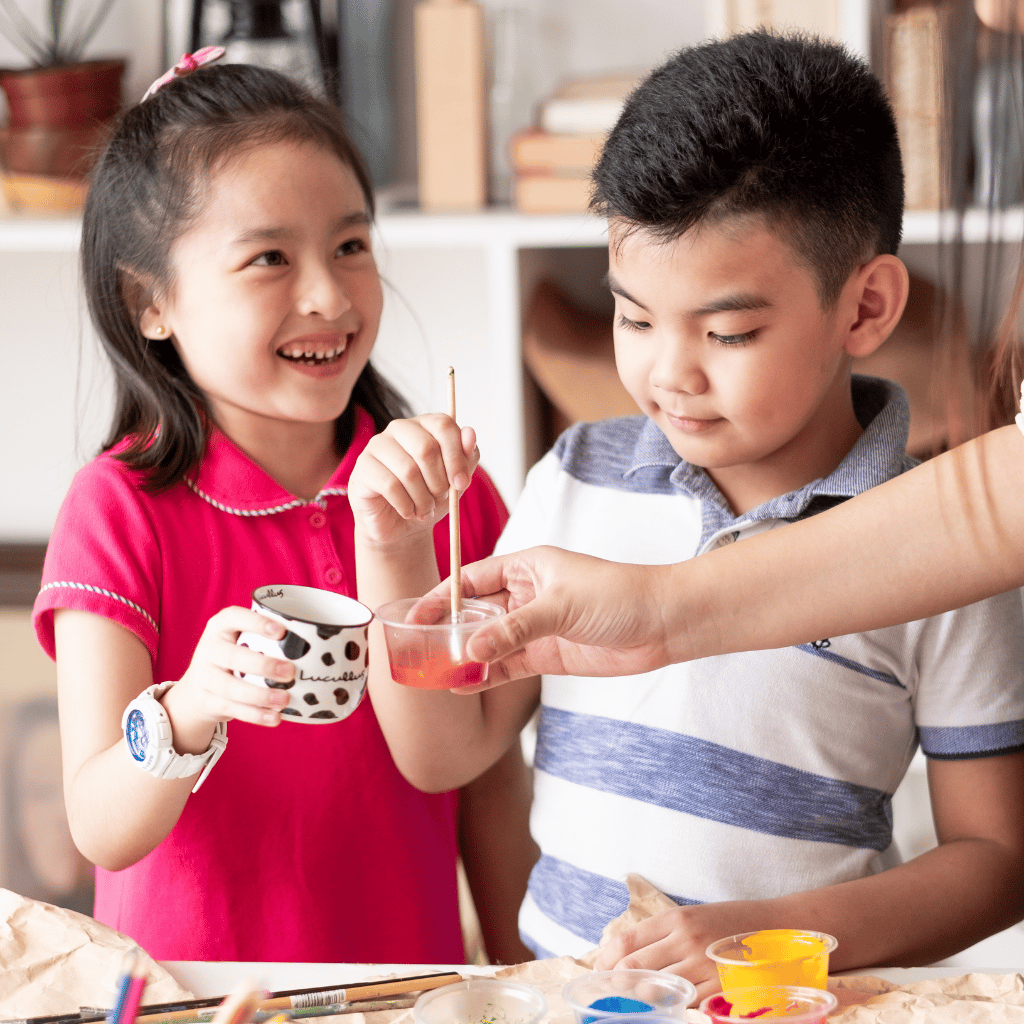
For example, bubbles may be used to practice words like “more,” “pop,” “go,” “my turn,” and “again.” Our therapists never force communication. Rather, they help your child experience communication as useful, fun, and rewarding.
Supporting Confidence and
Emotional Development
When children can communicate more clearly, many parts of daily life can become easier. They may feel less frustrated, more independent, and more willing to join in.
Early language therapy can help:
- Reduce communication-related meltdowns
- Increase independence during daily routines
- Build confidence with adults and peers
- Improve participation at home, school, and in the community
- Help caregivers understand and support their child’s communication style
- Create more positive interactions throughout the day
At The Clubhouse, we also give families simple strategies to use at home. These can include modeling short phrases, offering choices, pausing to give your child time to respond, and turning everyday routines into language-building opportunities.
Why Early Support Can Make a Big Difference
Reaching out for help early is not about rushing your child or comparing them to others.
Instead, it’s about giving them support before communication struggles become more frustrating.
School Readiness & Learning
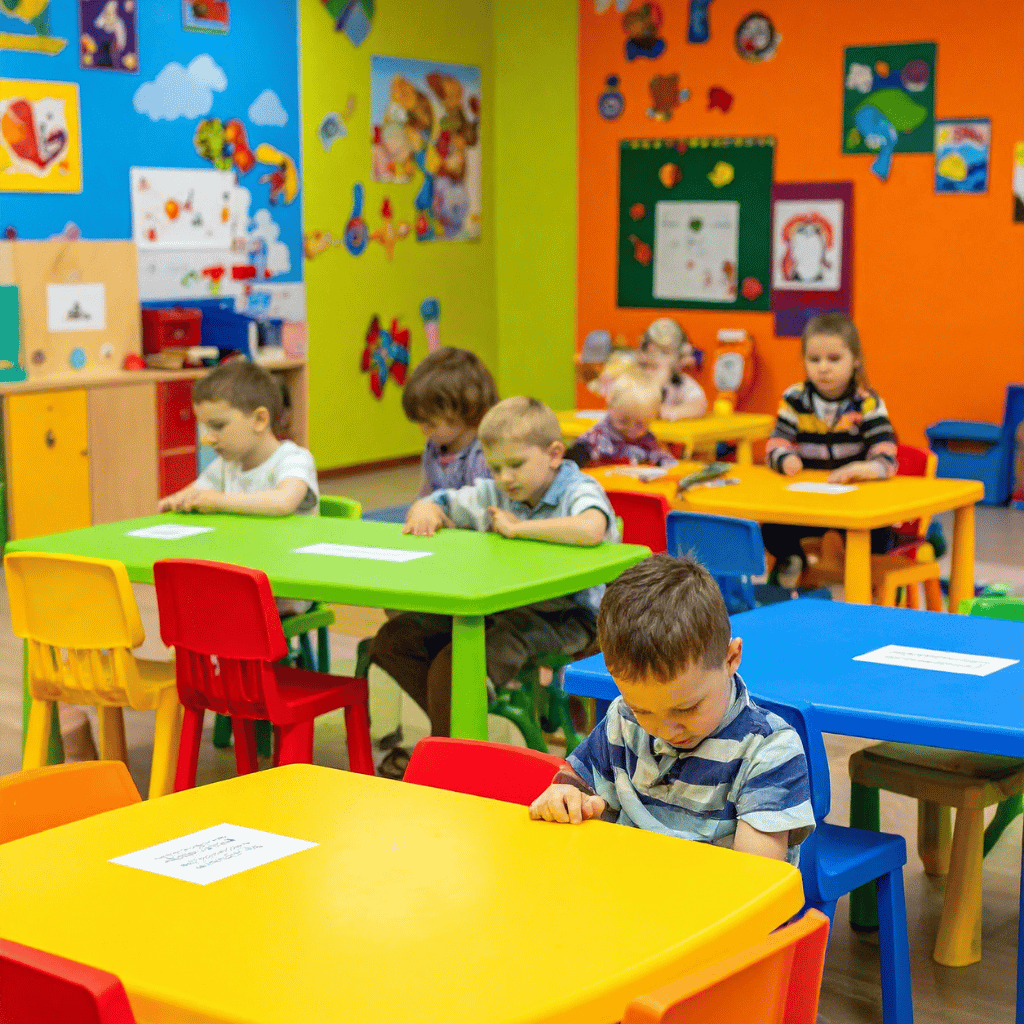
Language is the foundation for many early learning skills. Children use communication to follow classroom routines, listen to teachers, answer questions, understand stories, and participate with peers.
Early support can help your child build:
- Listening and attention skills
- Vocabulary for classroom concepts
- Direction-following skills
- Confidence in group activities
- Early storytelling and comprehension skills
- Readiness for preschool or kindergarten routines
For example, a child who understands “clean up, sit on the rug, and choose a book” will have an easier time joining classroom routines than a child who struggles to process those directions.
Social Development
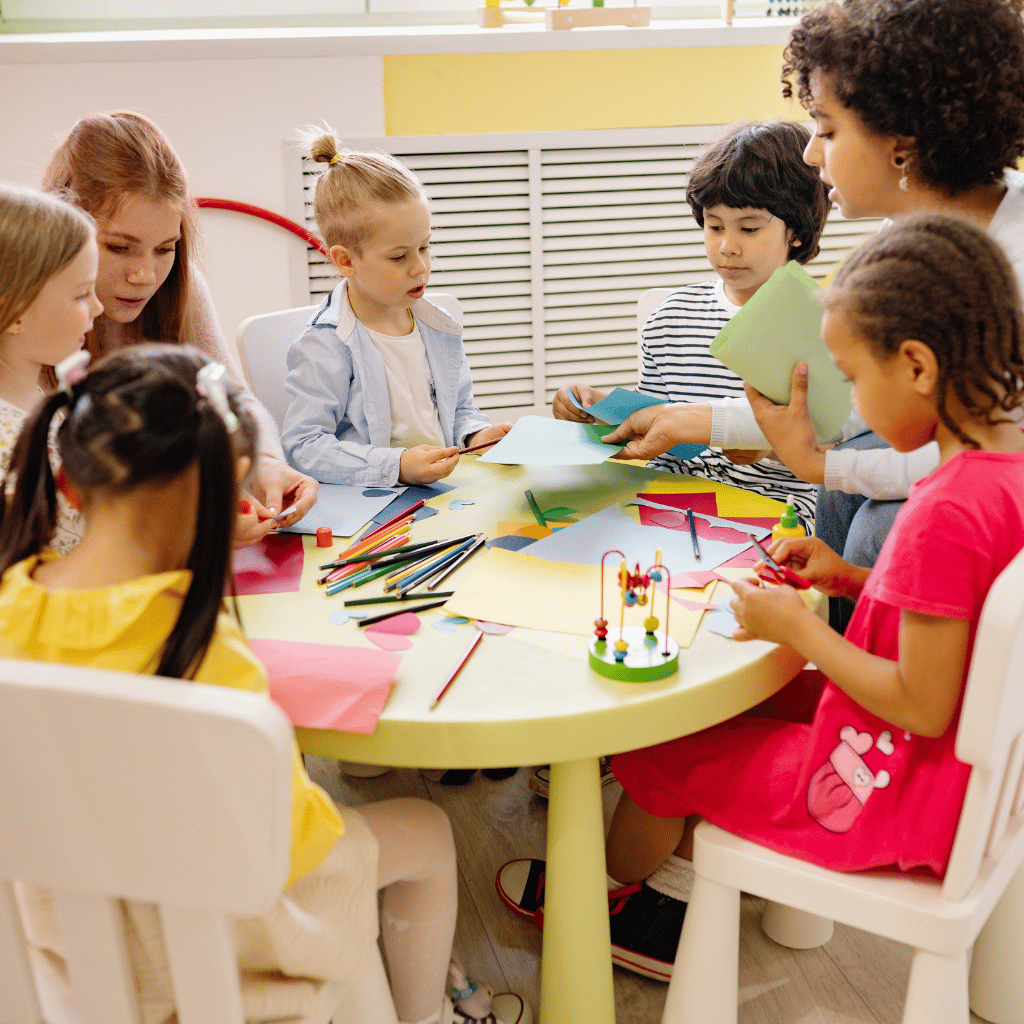
Friendships often begin with small moments of communication: “Want play?” “My turn.” “Look!” “Come here.” When language is hard, joining other children can feel overwhelming.
Therapy can help children:
- Start playing with others
- Respond to peers
- Share toys and ideas
- Take turns
- Use words during pretend play
- Recover when communication breaks down
- Feel more comfortable in group settings
Ultimately, these skills empower your child to feel connected, included, and more confident around others.
Long-Term Communication Growth
Early support can create a stronger foundation for future language, learning, literacy, emotional regulation, and social development. The goal is to help your child communicate more successfully in everyday life.
That may mean asking for help, telling you what hurts, joining a game, answering a question, sharing a story, or saying “I love you” in their own way.
What Speech Therapy Looks Like at The Clubhouse
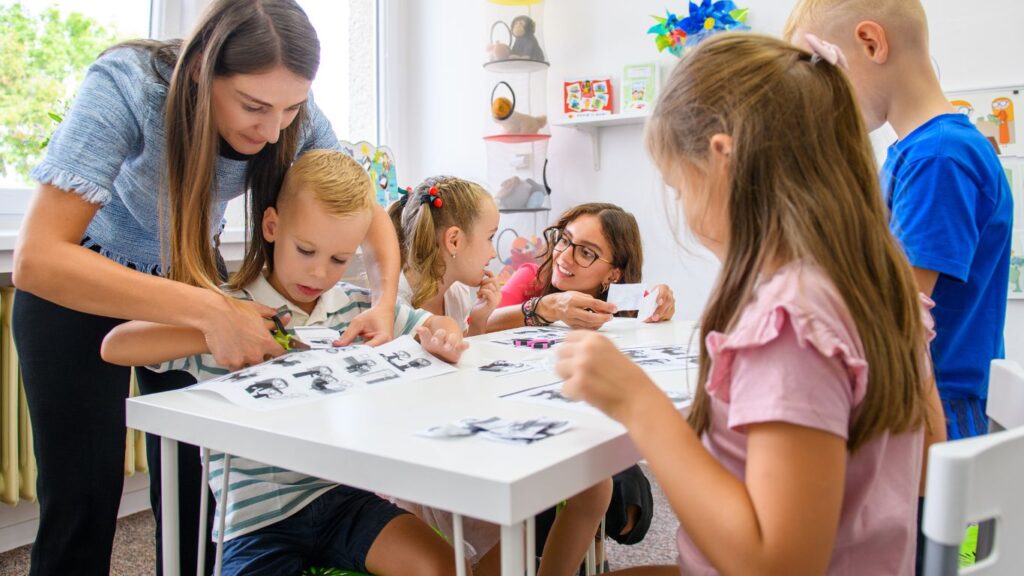
At The Clubhouse, speech therapy for early language delays is designed to feel welcoming, playful, and supportive. We understand that children learn best when they feel safe and engaged, and we respect your child’s individual experience.
Depending on your child’s needs, therapy may include:
Because The Clubhouse is a comprehensive pediatric therapy clinic, we look at the whole child. Some children with language delays may also benefit from support with sensory processing, feeding, motor skills, attention, or social-emotional development. Our team approach ensures therapy supports your child in real life, not just during sessions.
When in Doubt, Reach Out
If your child isn’t using words as expected, seems frustrated when trying to communicate, has trouble understanding directions, or isn’t engaging socially in the way you hoped, a speech and language evaluation can help.
Sometimes the answer is reassurance. Sometimes it’s a therapy plan. Either way, you gain clarity.
At The Clubhouse, we are here to support your child and your family with warmth, expertise, and encouragement. Your child’s voice matters, and we would be honored to help them grow into it.